Blog Pricing, Fees & Platforms
What's the Best Selling Platform? 47 Resellers Named Their Favorite, and Why
eBay was named most often, and complained about most. Which platforms 47 resellers called their favorite, why, and what vintage sellers picked.
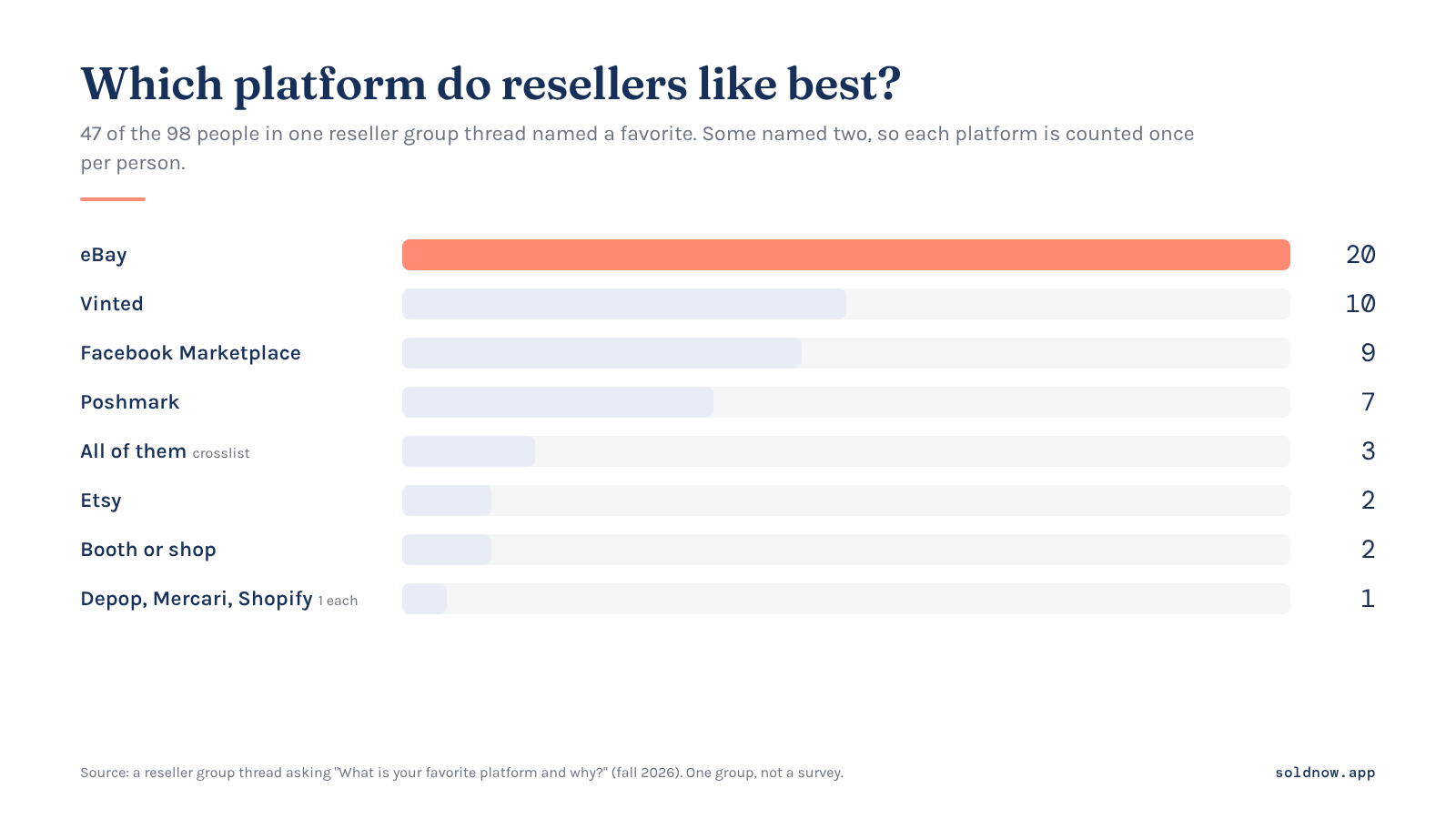
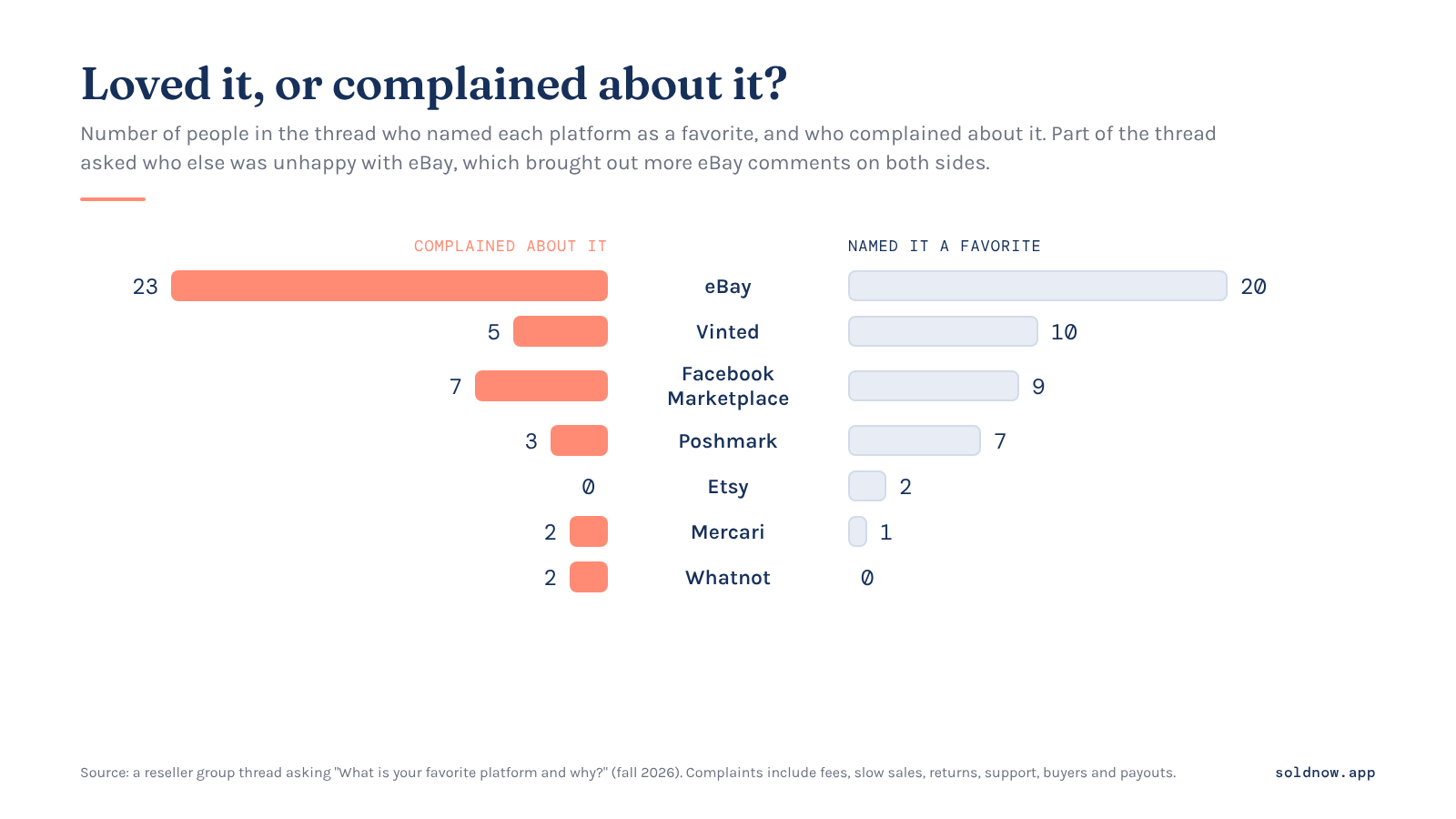
eBay was named as a favorite more than any other platform. Of the 47 resellers in one thread who named a favorite, 20 picked eBay. Vinted came next with 10, then Facebook Marketplace with 9 and Poshmark with 7. But eBay also drew the most complaints, from 23 people. The sellers who were happiest weren't loyal to one platform. They sold each piece where its buyer shops, and most of them sold in more than one place.
How did we count the favorites?
A reseller group thread asked a simple question: “What is your favorite platform and why?” It drew 160 comments from 98 people. We read every one and counted each person once for each platform they named as a favorite, or as the place that works best for them. Some named two. 47 people named at least one.
Two things to keep in mind. This is one Facebook group, not a survey. And partway through, one seller asked who else was fed up with eBay. That pulled in more eBay comments on both sides, the fans and the frustrated.
Why is eBay still the favorite for so many resellers?
The eBay fans in the thread gave the same few reasons:
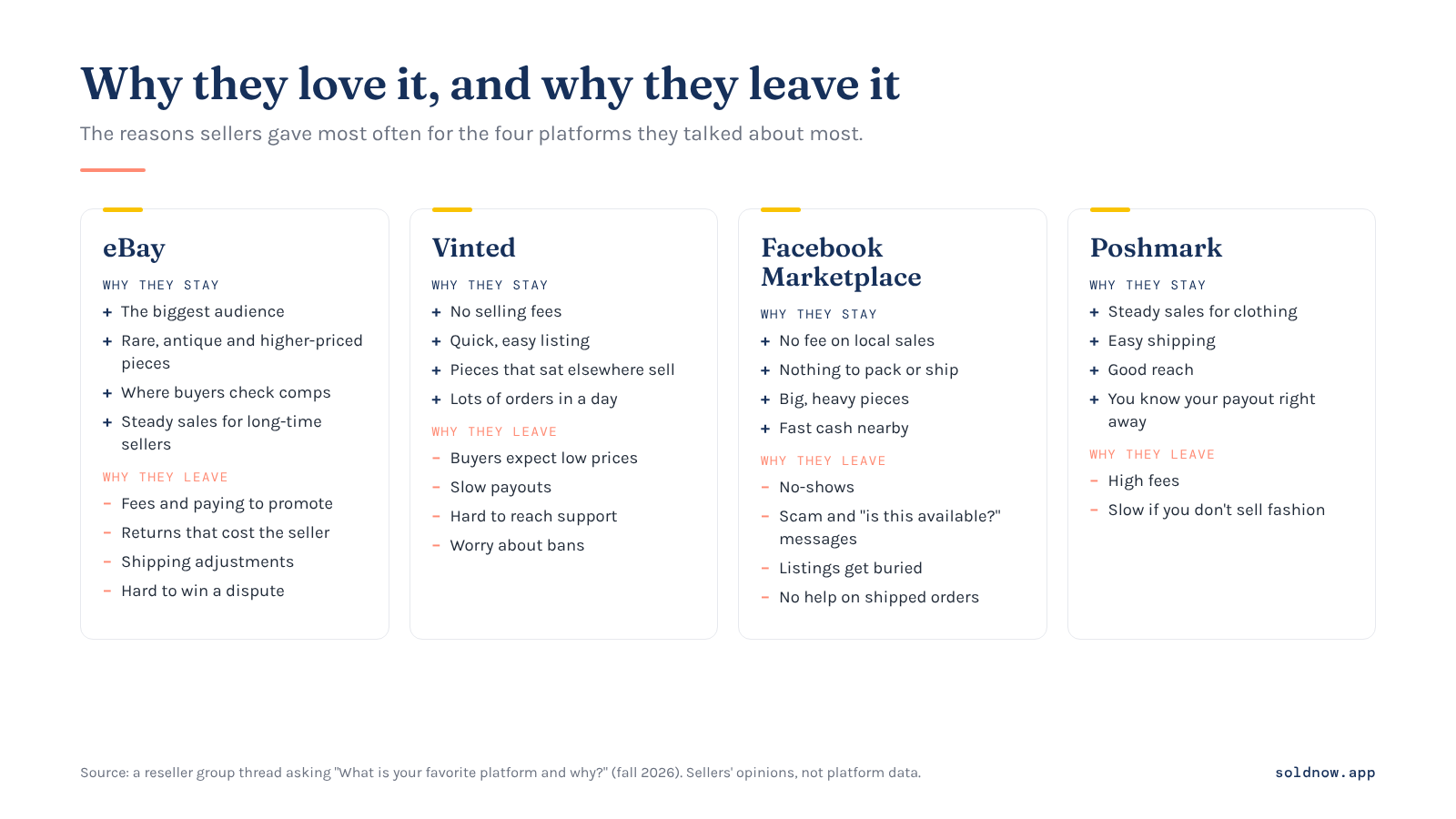
- The audience. Several sellers said no other platform comes close on traffic. One said they'd worry when another site had even half of eBay's buyers.
- Rare, antique and higher-priced pieces. Sellers who don't love eBay for everyday inventory still keep it for rare finds, antiques and high-end pieces they can't sell anywhere else.
- Comps. Buyers and sellers both check eBay sold listings to price things.
- Steady sales over years. Sellers who started on eBay in the late 1990s and 2000s said it's still their best platform. Another said eBay still sells more of their items than any other site they've tried.
- Fast payouts and support for top sellers. One Top Rated seller said they get paid right away and have had good help from customer service.
A few also said eBay picks up when other sites slow down, and that sending offers to watchers keeps their sales moving. If you use offers, our guide on how to handle offers on antiques and vintage helps you set your floor first.
Why did eBay also get the most complaints?
The same thread had 23 people who were unhappy with eBay. Their reasons:
- Fees, plus paying to promote. Several said their listings don't get seen unless they pay for promotion on top of the regular fees.
- Returns. Sellers described buyers sending back low-priced items, and the seller paying for the return label.
- Shipping adjustments. One seller was charged extra after a carrier re-weighed a package, and the appeal went nowhere.
- Disputes. A few said eBay sided with the buyer even when they had photos and messages to back them up.
- Slow sales. Several long-time sellers said their sales are down this fall, even when they're doing everything right.
So eBay tops the chart on both sides. It's the platform most people have the longest history with, good and bad.
Why is Vinted the new favorite for some eBay sellers?
Vinted was the platform people were switching to. At least four of the 10 Vinted fans said they came from eBay or used to sell mostly there. Their reasons:
- No selling fees. Vinted doesn't charge sellers a selling fee. Buyers pay a Buyer Protection fee (opens in a new tab) instead.
- Fast, easy listing. Several said it's the easiest platform they've used.
- Things that sat elsewhere sell. One seller said boots and vintage pieces that sat on other sites for a year sold within a day on Vinted.
The complaints were just as clear. Buyers expect low prices, payouts can take a while, support is hard to reach, and a few sellers worried about getting banned. One seller summed it up as the place for the last bits of inventory you can't seem to move.
What do resellers like about Facebook Marketplace?
Nine people named Facebook Marketplace. For most of them, the draw was selling locally: no fee on an in-person sale, no supplies to buy, no labels and no trips to the post office. It's where sellers send big, heavy pieces that are a pain to ship.
It also drew complaints from seven people: no-shows, scam messages, endless “is this available?” messages from brand-new profiles, and listings that get buried. One longtime seller said sales dropped after Facebook took away the option to delete and relist. Another said it's hard to get help when a shipped order goes wrong.
What about Poshmark, Etsy and the rest?
- Poshmark (7 favorites) was a clothing sellers' pick. Fans liked the easy shipping, the reach, and knowing what they'd make the moment something sold. The complaints were high fees and slow sales outside of fashion.
- Etsy (2 favorites) came from hard-goods sellers. One sells almost everything there. Another said Etsy now beats the others on organic traffic for vintage hard goods.
- A booth or shop (2 favorites). One seller loves talking to customers, who often pay cash, so there's no platform fee.
- “All of them” (3). These sellers crosslist everywhere. As one put it, every sale is better than no sale.
Depop, Mercari and Shopify each had one fan. Whatnot had none. The two people who brought it up were wary of it, and one said support was impossible to reach when something went wrong.
What did vintage and antique sellers say?
Most of the thread was about clothing, so we pulled out the answers from people selling glass, décor, art and other hard goods:
- eBay for the rare and the high-end. Several hard-goods sellers said eBay still works for rare, antique or higher-priced pieces, even when it's slow for everyday inventory.
- Etsy for vintage hard goods. Both Etsy fans were talking about hard goods, not clothing.
- Booths for the breakables. One eBay seller also runs three antique booths for fancy breakables and sells lower-priced pieces at a weekly flea market. They said they'd never trust eBay to be their only way to sell.
- Not every booth is working. One seller said they were closing both their eBay account and their antique booth because sales were too slow. If that sounds familiar, we looked at whether antique malls are going away.
The takeaway: Your best platform is the one where your kind of piece sells, and the sellers doing best have more than one.
How do I pick my favorite platform?
Look at your own sales, not the thread's. Track where each piece sold, how long it took and what you kept after fees. The SOLD Now Profit Calculator shows what you keep on a sale, and our post on the hidden fees resellers miss covers the costs that don't show up in a platform's headline rate. To compare platforms side by side, we worked out what you keep on a $40 vintage sale on eBay, Etsy, Whatnot, Facebook Marketplace and Vinted.
Then put each piece where its buyer shops. That usually means more than one platform, which is where the work piles up.
Sell in more than one place without double the work
SOLD Now's Gold plan ($39.99 a month) crosslists to eBay, Etsy, Whatnot and Facebook. Whatnot and Facebook listings go up by manual import. When a piece sells, SOLD Now ends the eBay and Etsy listings for you, so a one-of-a-kind piece doesn't sell twice.
Frequently Asked Questions
What is the most popular selling platform for resellers?
In one reseller group thread, eBay was named as a favorite most often: 20 of the 47 people who named a favorite picked it. Vinted (10), Facebook Marketplace (9) and Poshmark (7) came next.
Why do resellers complain about eBay?
The most common reasons were fees and paying to promote listings, returns that cost the seller, shipping adjustments, disputes that went to the buyer, and slower sales this fall.
Is Vinted good for resellers?
Vinted fans liked that there's no selling fee and that listing is quick and easy. Several said items that sat elsewhere sold fast. The trade-offs they named were low prices, slow payouts and hard-to-reach support.
What is the best platform for vintage and antique hard goods?
In the thread, hard-goods sellers used eBay for rare, antique and higher-priced pieces, Etsy for vintage hard goods and décor, and booths or flea markets for breakables and lower-priced pieces.
Should I sell on more than one platform?
Most of the happiest sellers in the thread did. Each platform reaches different buyers. Just plan how you'll take a piece down everywhere else as soon as it sells.
SOLD Now: From Spreadsheets to a Real Business System.
Sources
Checked November 1, 2026.
- A reseller group thread, “What is your favorite platform and why?” (fall 2026): 160 comments from 98 people, paraphrased, names withheld. Each person was counted once per platform they named as a favorite; complaints were counted once per person per platform.
- Vinted, Selling fees and Buyer Protection (opens in a new tab)