Blog Booth selling
Are Antique Malls Going Away? What Dealers See in 2026
What closings, buyer research and booth dealers say about antique vs. vintage, and how to find the right mix for your own booth.
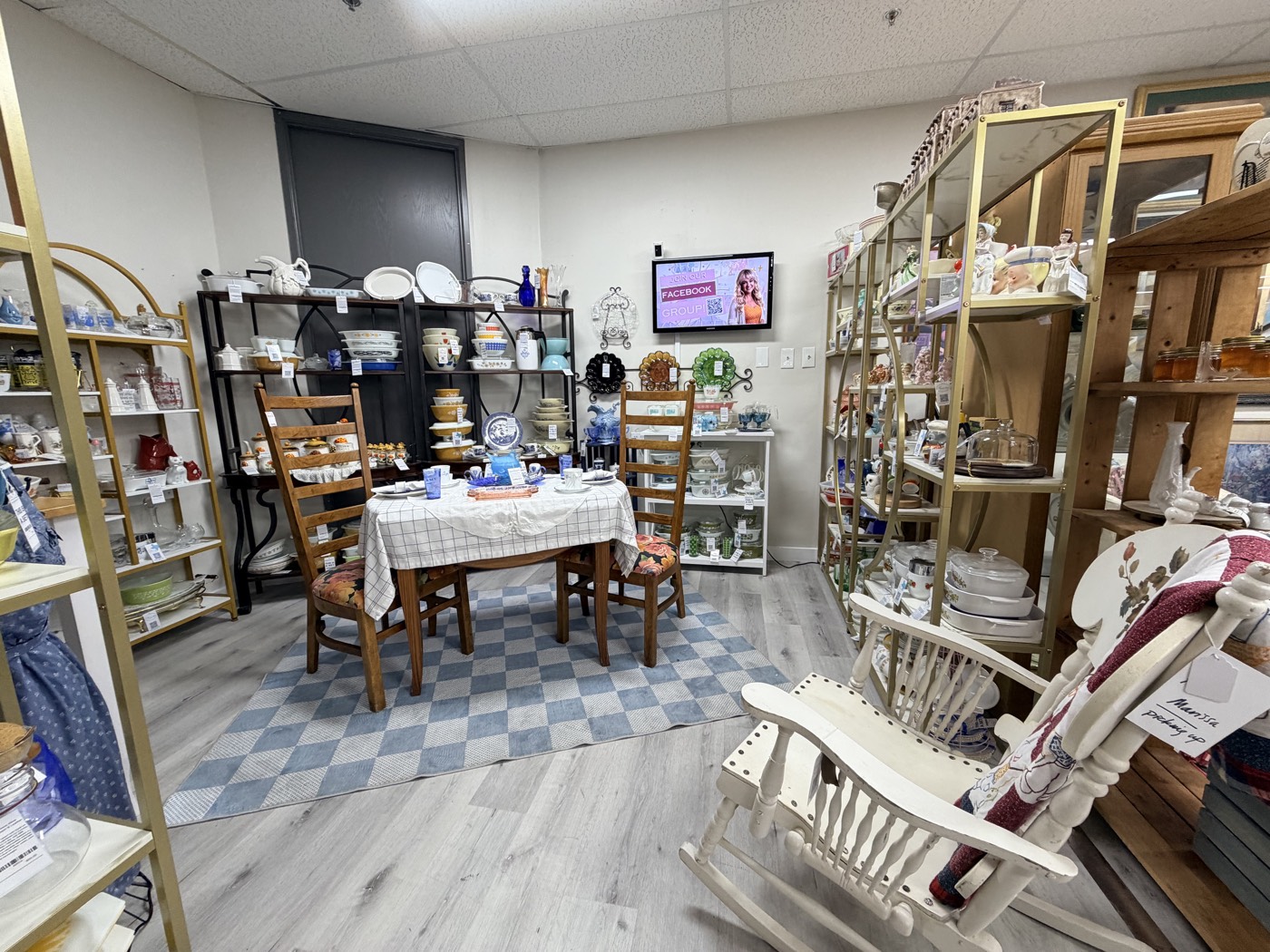
No, antique malls aren't going away, but what sells in them is changing fast. Most of the malls closing this year are closing because an owner is retiring or a landlord wants the building back, not because shoppers stopped coming. The shoppers who are coming in are younger, and many of them are hunting the 1960s through the 1990s rather than the 1890s.
That's the short answer. The longer one came out of a conversation we watched unfold among antique dealers this month, and it's worth walking through, because both sides of it are right about something.
Where did this question come from?
A store owner who describes himself as a rusty metal, Americana and primitives guy asked a dealer group whether “true antique” stores are a dying breed. His store runs about 90% antiques and 10% tasteful newer pieces. His wife thinks it should be closer to 75/25. He wanted to know if he was hurting the business by holding the line.
Many dealers answered. Some said antiques are a dying industry and they can't give away beautiful 19th-century furniture. Others said their Victorian and Edwardian business is booming and a quarter of their buyers are under 30. Both groups were describing real booths. The research below explains how they can both be right.
Are antique malls actually closing?
Some are, and every closing stings. But the reasons matter.
- The Clarion Antique Mall in Shippenville, Pennsylvania closes for good on October 20, 2026, after 40 years, because its owners are retiring (exploreClarion (opens in a new tab), September 9, 2026).
- The Austin Antique Mall closed in May 2024 after 40 years because the landlord, Playland Skate Center, chose not to renew the lease so it could expand (Community Impact (opens in a new tab), May 13, 2024). One longtime vendor told the Austin American-Statesman that comparable malls in Round Rock and Taylor were full or nearly full.
- Down the road in Salado, Texas, three longtime eBay and Facebook Marketplace sellers bought the 20-year-old Salado Antique Mall this summer, kept every vendor, added 12 more, opened an extra day each week, and are adding a comic book booth, a Hot Wheels booth and a vintage T-shirt section to bring in younger shoppers (KWTX (opens in a new tab), July 27, 2026).
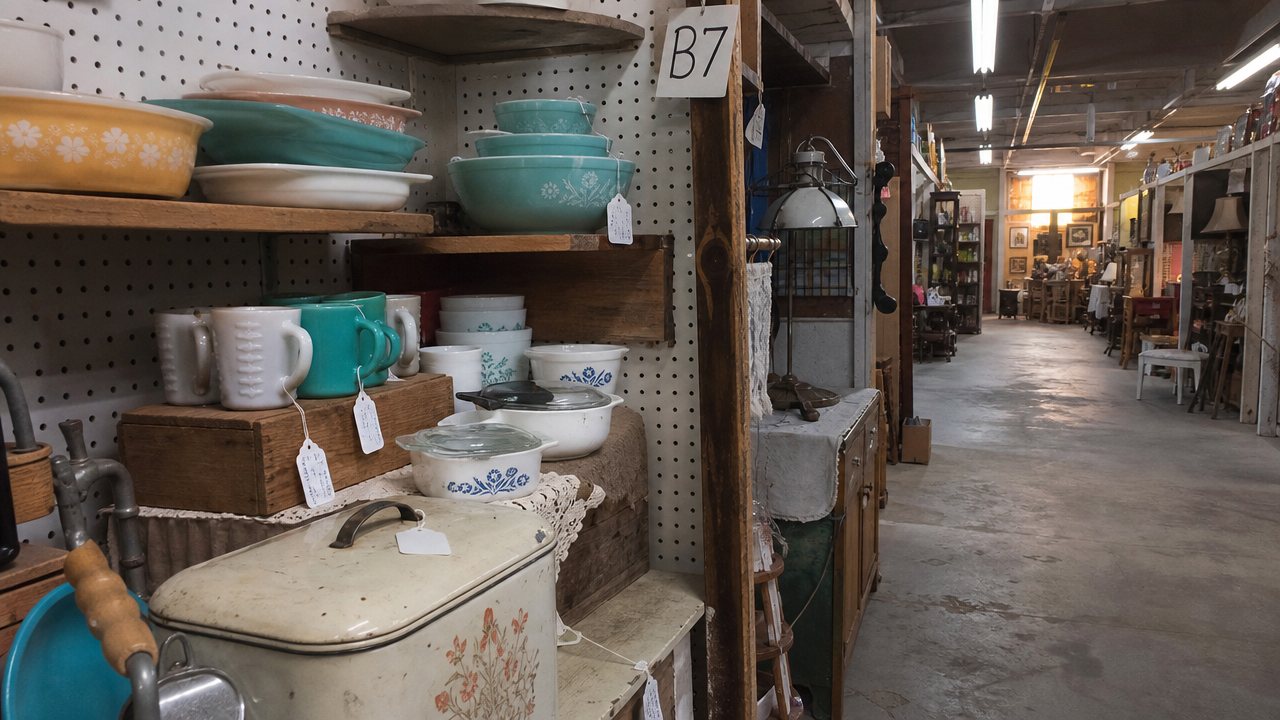
The industry numbers say the same thing in a different way. IBISWorld's report on U.S. antique stores (published January 2024) estimated that industry revenue grew about 6% a year from 2019 to 2024, to around $4.5 billion, while the number of businesses shrank about 1.3% a year, to 13,362. It expects the industry to keep growing over the next five years (IBISWorld (opens in a new tab)). Fewer stores, more money moving through the ones that are left.
Why does it feel like antiques stopped selling?
Because some antiques did. The clearest example is what the trade calls “brown furniture,” the big dark-wood case pieces of the 18th and 19th centuries. Auction prices for it began falling steeply after about 2004, and pieces that once brought thousands often bring a few hundred now. The usual explanation is simple: homes got smaller and lighter, and few people have room for a large sideboard (The Spectator (opens in a new tab), September 16, 2026).
The same article notes the top of that market has come back. A Georgian mahogany bookcase sold for £312,500 in March 2025, well over its estimate, and a Sotheby's furniture sale this year sold 87% of its lots. That matches what the high-end dealers in the conversation said: exceptional antiques are selling, and average mass-produced pieces are the ones sitting.
So “antiques don't sell” is really two statements. Entry-level antique furniture is hard to move. Quality, small, and well-priced antiques still have buyers.
What are younger shoppers buying in antique malls?
Mostly their own childhood, or their grandparents' house. Dealers in the conversation said the same thing again and again:
- Their best sellers come from the 1960s to the 1980s, and the 1990s are starting to move.
- A vendor-market owner who tracks sales per square foot said the bottom third of her vendors are mostly antiques, and her top seller every month is a music, gaming and vintage toy booth.
- Gen X shoppers are buying the toys their parents wouldn't get them.
- Shoppers in their 20s and 30s are a large share of business, and they aren't buying much from 1926.
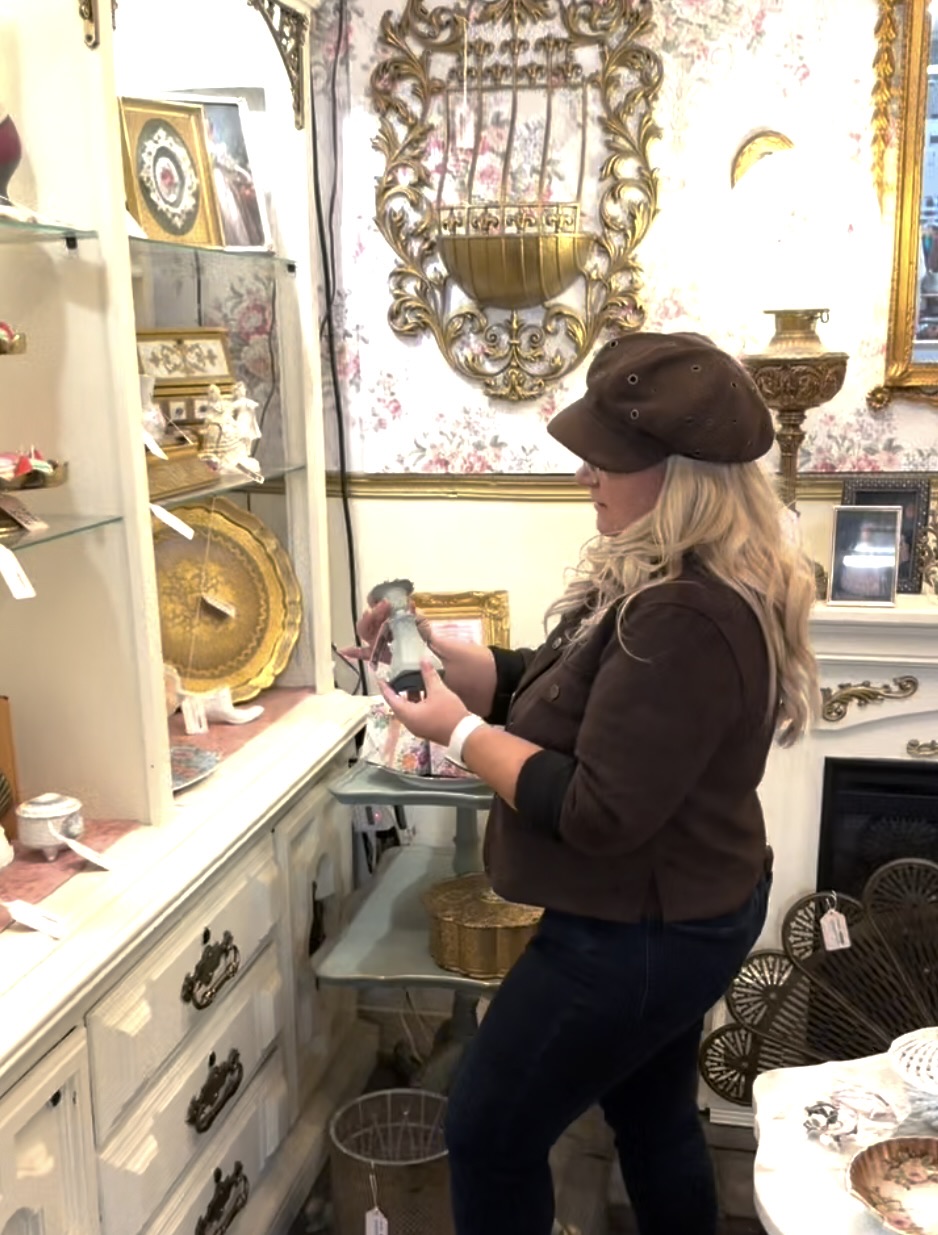
Several dealers put it the same way: people collect what they grew up with, and every generation grew up with something a little newer.
Outside research points the same way. ThredUp's 2026 Resale Report, which covers secondhand clothing, projects that Gen Z and Millennials will drive 71% of resale market growth through 2030 (ThredUp (opens in a new tab), April 2, 2026). A 2025 study of about 390 young Italian shoppers found that wanting something no one else has was the strongest reason Gen Z buys vintage, and that they prefer buying it at markets and physical stores rather than online (SDA Bocconi (opens in a new tab), January 15, 2026). Both studies are about fashion, not furniture, but the pattern is familiar to anyone who has watched a 25-year-old dig through a bin of Pyrex.
That last point is good news for a mall. The thing younger buyers want most, the hunt in person, is the thing an antique mall does better than any website.
What does that look like in a real booth?
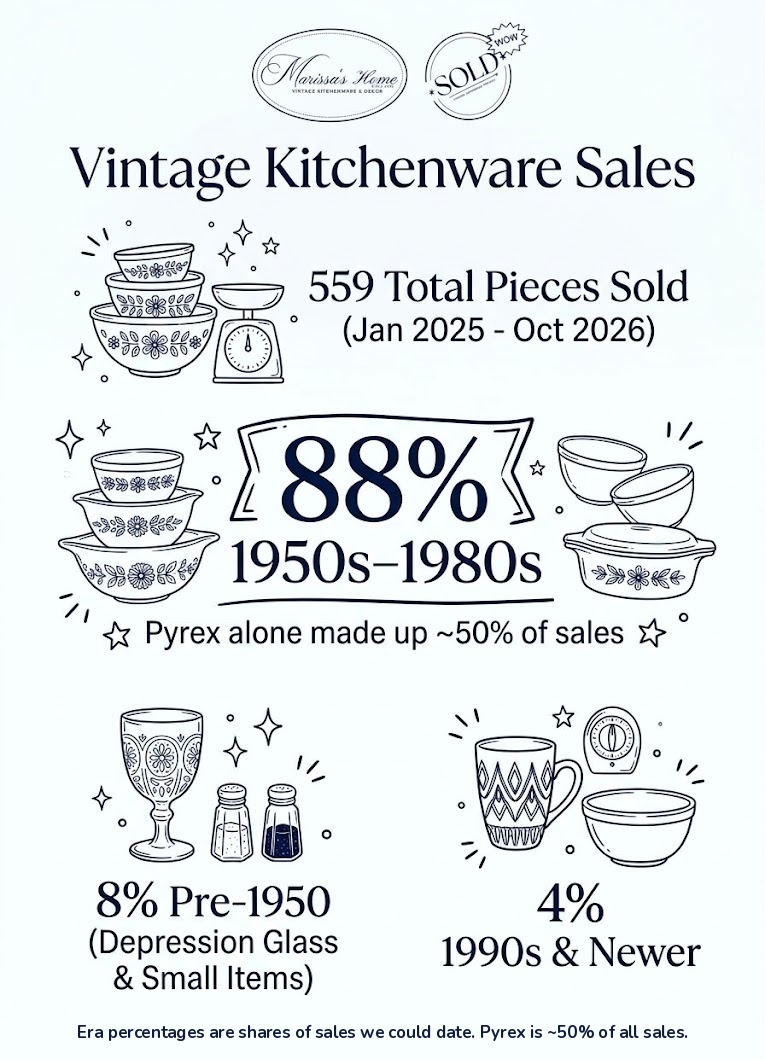
We checked it against our own shop. Marissa's Home, the vintage kitchenware business behind SOLD Now, sells from two Texas antique malls, at shows and online. It sold 559 pieces between January 2025 and mid-October 2026, and we could date 229 of them from the listing or the years the pattern was made.
Pieces from the 1950s through the 1980s brought in 88% of the sales from those dated pieces. Pieces made before 1950 brought in 8%, and they were mostly smaller items like Depression glass. Pieces from the 1990s on brought in 4%. Vintage Pyrex alone was about half of all sales. That's one shop, not a national survey, but it matches what dealers in the conversation described almost exactly.
What is the difference between antique and vintage?
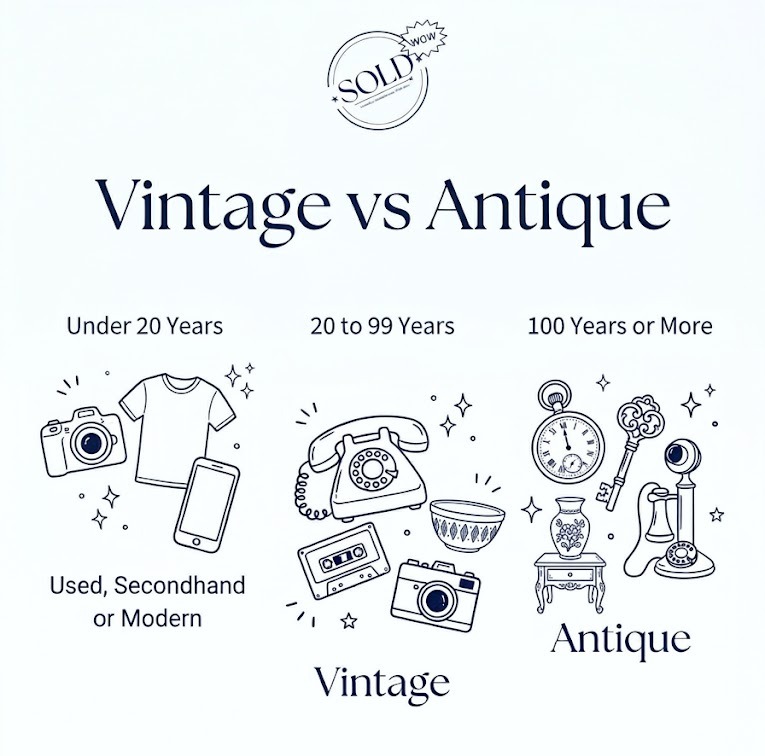
The one firm line is legal. U.S. Customs treats an item as an antique, for duty-free import, when it is at least 100 years old (19 CFR § 10.53 and HTS 9706 (opens in a new tab)). “Vintage” has no legal definition. The trade uses it loosely, and a common rule of thumb, shared in the conversation, looks like this:
| Age | What most dealers call it |
|---|---|
| Under 20 years | Used, secondhand or modern |
| 20 to 99 years | Vintage |
| 100 years or more | Antique |
Every January, a new year's worth of items crosses the 100-year line. In 2026 that's things made in 1926. The 1950s Formica table is now about 75 years old, and the Pyrex your grandmother used is well into vintage.
So should a store stay “true antique” or mix in newer pieces?
The dealers didn't agree on a number, and that's fine. The splits people described ranged from 90/10 to 80/20 to 75/25, and one dealer sketched a mix of 35% antique, 35% vintage and the rest split between makers, unique new decor and niche collectibles.
Where they did agree was on standards. Almost everyone drew the same line:
- Nothing from Temu, Amazon, dollar stores, or the big-box decor aisle.
- No new pieces made to look old. If it's new, label it new.
- Curated beats cluttered. A mix works when it's chosen, not when it's whatever fits on the shelf.
And several store owners made a point worth repeating: a booth that's 100% antiques and doesn't move isn't protecting the store's reputation, it's paying rent on a museum. If that's what you love and you can afford it, that's a perfectly good reason. If it's a business, the people walking in the door get a vote.
How do you know which mix is right for your booth?
Your own numbers, not anyone's rule. The dealer who could name what each vendor sells per square foot is the one who settled the argument for her store. You can do the same thing for your booth:
- Tag every piece with what era it comes from (a category like “1970s” or “Victorian” works).
- Record what you paid and when it went into the booth.
- Each month, look at what sold, by era, and how long it sat first.
- Compare that to your booth rent. Which era is paying the rent, and which is riding along?
After three months you'll know whether your 1890s pieces are your best sellers or your best decorations. Either answer is useful. If you'd like more on reading your sales during a slow stretch, our post on antique booth sales slowing down walks through it.
A spreadsheet can do this for a few dozen pieces. Once you have hundreds of one-of-a-kind items, it gets tedious, which is why we built booth inventory tools into SOLD Now: every piece gets a category and a location, and the reports show what each category earns by booth and by month. Inventory and reports are on the Gold plan, $39.99 a month, and every paid plan starts with a 30-day free trial.
The quotable answer: Antique malls aren't disappearing. They're changing what they sell. Quality antiques still have buyers, entry-level antique furniture is hard to move, and the fastest-growing group of shoppers is younger and hunting the 1960s to 1990s, in person. The dealers doing well know what sells in their own booth and keep a clear line against new junk.
Frequently Asked Questions
Are antique malls going away?
No. Some are closing, mostly because owners retire or landlords redevelop the building. IBISWorld estimated U.S. antique store revenue grew from 2019 to 2024 even as the number of stores fell, and when the Austin Antique Mall closed, a vendor reported that nearby Texas malls were full or nearly full.
Why don't antiques sell like they used to?
Big, dark, mass-produced antique furniture has fallen out of favor because homes are smaller and tastes are lighter. High-quality and small antiques still sell, and the top of the auction market has strengthened recently.
What sells best in antique malls right now?
Dealers report that items from the 1960s through the 1980s sell best, with the 1990s gaining, along with vintage toys, music and gaming. Younger shoppers are buying the things they or their grandparents grew up with.
What is the difference between antique and vintage?
For U.S. Customs, an antique is at least 100 years old. Vintage has no legal definition; most dealers use it for items 20 to 99 years old.
Should I sell newer items in my antique booth?
That depends on your mall's rules and your shoppers. Most dealers draw the line at mass-produced new goods and reproductions, and say anything new should be clearly labeled as new.
Built for resellers, by resellers.
Sources
- exploreClarion, “Clarion Antique Mall to Close After 40 Years,” September 9, 2026 (opens in a new tab)
- Community Impact, “Last day for longtime Austin antique mall is May 15,” May 13, 2024 (opens in a new tab)
- Austin American-Statesman, “‘This is history’: Vendors reflect as Austin Antique Mall prepares to close after 40 years,” February 2024
- KWTX, “Three best friends buy Salado Antique Mall,” July 27, 2026 (opens in a new tab)
- IBISWorld, “Antique Stores in the US,” published January 2024 (opens in a new tab)
- The Spectator, “Brown furniture isn't dead,” September 16, 2026 (opens in a new tab)
- ThredUp, 2026 Resale Report press release, April 2, 2026 (apparel only) (opens in a new tab)
- SDA Bocconi, “Identity over ideology: how Gen Z is rediscovering vintage,” January 15, 2026 (fashion) (opens in a new tab)
- 19 CFR § 10.53, Antiques (Cornell Legal Information Institute) (opens in a new tab)
- Marissa's Home sales records in SOLD Now, January 1, 2025 to October 15, 2026 (559 pieces sold, 229 dated).