Blog Shipping & Fees
Which Selling Platform Is Best for Vintage? What Resellers Say, and What You Keep After Fees
What you keep on a $40 vintage sale on eBay, Etsy, Whatnot, Facebook Marketplace and Vinted, and how resellers pick the right platform for each piece.

There isn't one best platform for vintage. The sellers doing well right now match each piece to the place its buyer already shops. They also know what they keep after fees before they list. On a $40 vintage sale with $10 shipping, platform fees run from $0 (Vinted, or Facebook Marketplace local pickup) to $7.20 (eBay). That gap matters less than whether the right buyer sees the piece at all.
A reseller group thread asked a simple question: “What is your favorite platform and why?” Dozens of sellers answered. Almost nobody named only one. Most sell in two or three places, and they picked each one for a reason. Here's what they said, plus the fee math for a typical vintage sale.
What do eBay, Etsy, Whatnot, Facebook Marketplace and Vinted charge on a $40 vintage sale?
We worked out the fees on one sale: a $40 piece, with the buyer paying $10 shipping. That's platform fees only. Your label, packing and what you paid for the piece come out after this.
| Platform | Fees on a $40 sale + $10 shipping | You keep (before label and cost of goods) |
|---|---|---|
| Vinted | $0 (buyer pays a Vinted fee) | $40.00 |
| Facebook Marketplace, local pickup | $0 | $40.00 |
| Whatnot (US standard tier) | $4.95 | $35.05 |
| Facebook Marketplace, shipped | $5.00 | $35.00 |
| Etsy | $5.20 | $34.80 |
| eBay (most categories, no Store) | $7.20 | $32.80 |
How we got there, from each platform's fee page on November 1, 2026:
- eBay: 13.6% of the total sale, shipping included, plus $0.40 per order for sales over $10, in most categories for sellers without a Store (eBay selling fees (opens in a new tab)).
- Etsy: $0.20 to list, a 6.5% transaction fee on the item and shipping, and payment processing of 3% plus $0.25 in the US (Etsy fees (opens in a new tab), Etsy Payments (opens in a new tab)). Offsite Ads can add 12–15% on sales that come from an Etsy ad. We left that out.
- Whatnot: Since September 21, 2026, Whatnot uses tiers. US sellers in the standard tier pay 8% commission on the item price, plus 2.9% and $0.30 for processing on the full order (Whatnot seller fees (opens in a new tab)).
- Facebook Marketplace, shipped: 10% per shipped order, with a $0.80 minimum. Local pickup paid in person has no Marketplace fee (Closo's 2026 summary (opens in a new tab)).
- Vinted: No selling fee for sellers. Buyers pay a Buyer Protection fee on top of your price (Vinted help (opens in a new tab)).
Want to run your own numbers? Plug your item, shipping and cost into the SOLD Now Profit Calculator. The fees we haven't counted here, such as currency conversion, shipping adjustments and fee tax, are in our post on the hidden fees resellers miss.
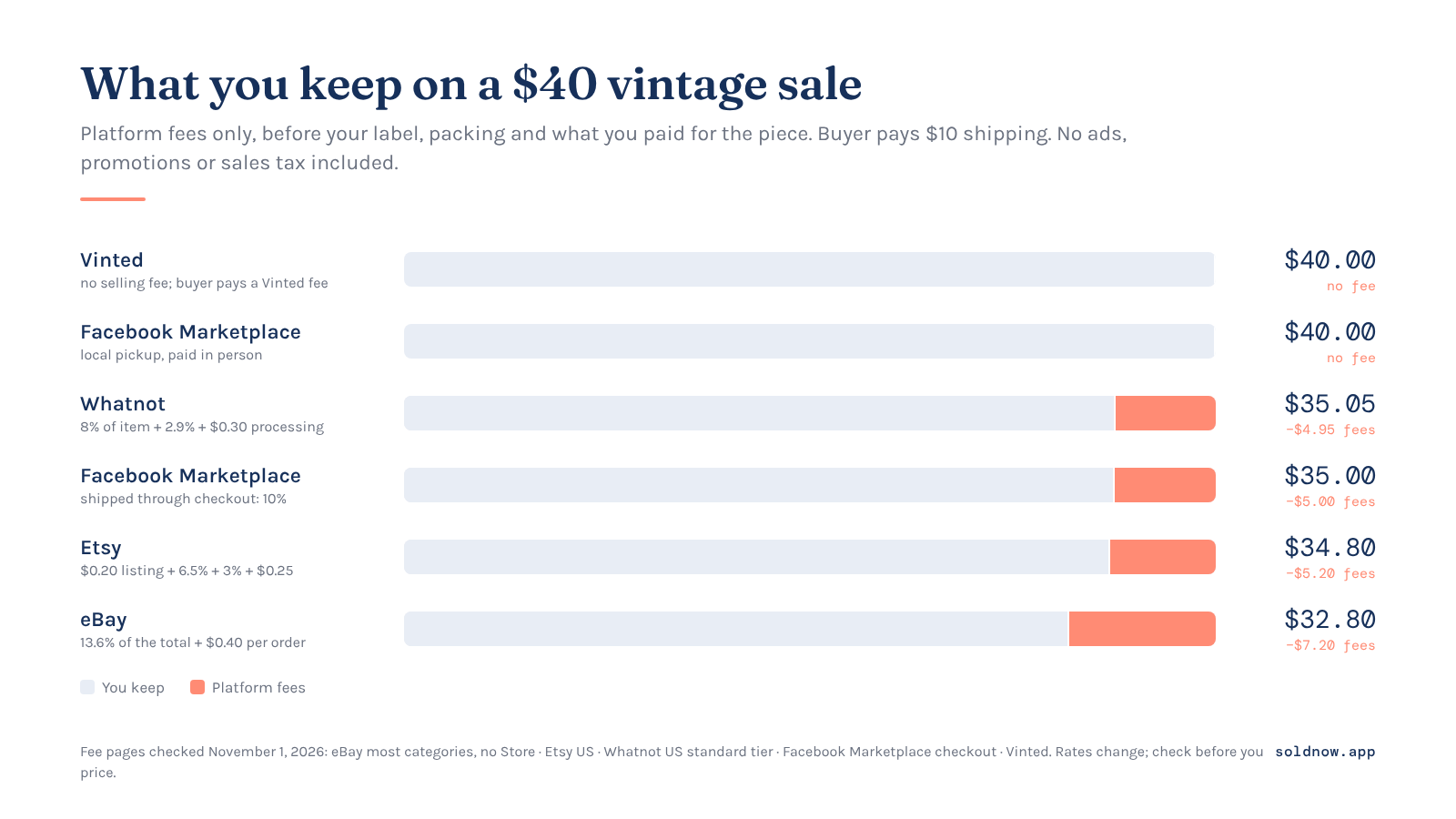
The takeaway: On a $40 vintage piece, the difference between the cheapest and the priciest platform is about $7. One sale to a buyer who wanted that exact piece is worth more than that.
Which platform do resellers like best, and why?
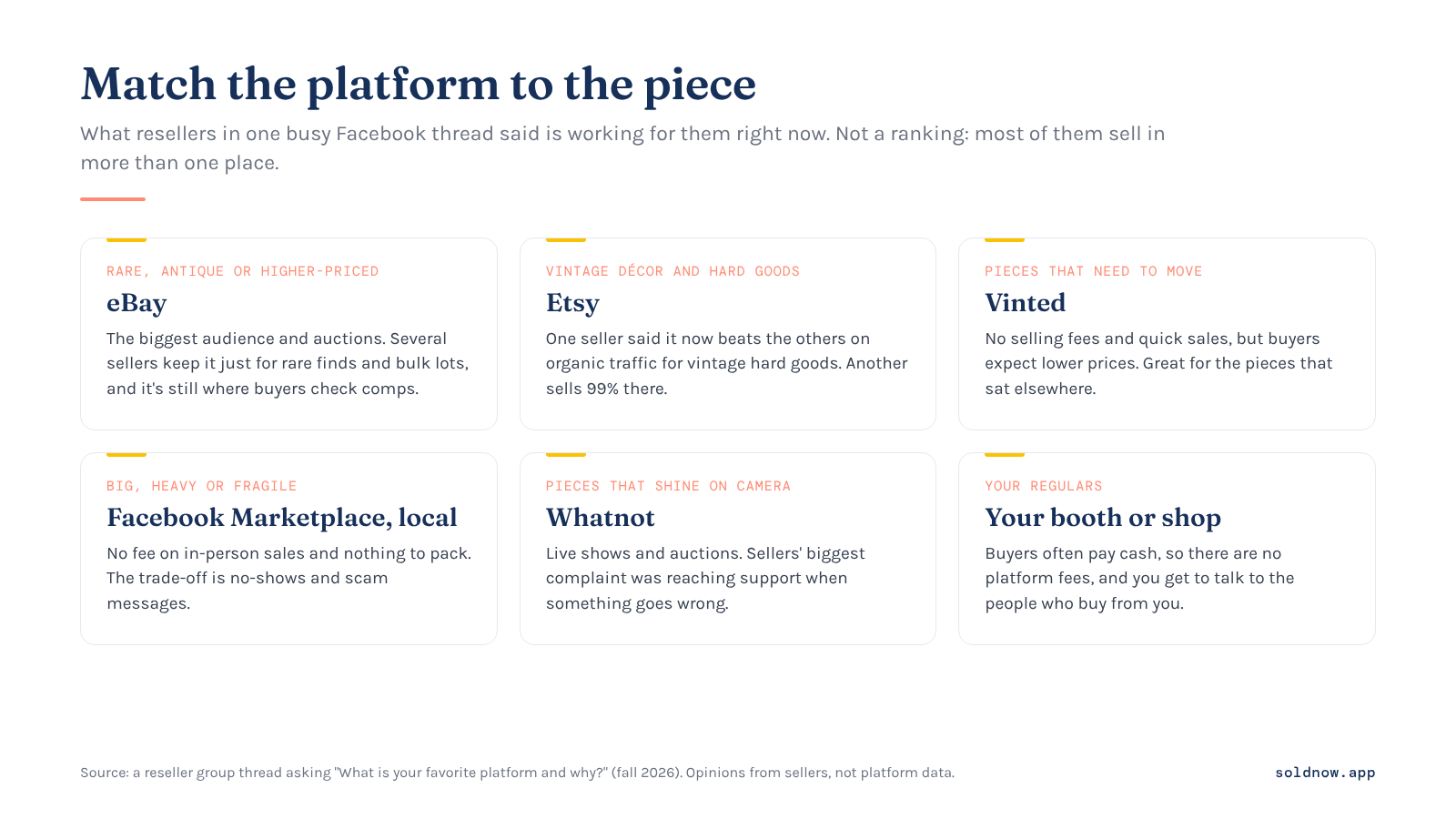
The thread didn't crown a winner. It sorted itself by the kind of piece.
eBay for rare, antique and higher-priced pieces. Several sellers said eBay still has the biggest audience and auctions that can surprise you. Some keep it just for rare finds and bulk lots. It's also where buyers go to check comps, so a well-priced listing there gets seen.
Etsy for vintage décor and hard goods. One seller said Etsy now beats the others on organic traffic for vintage hard goods. Another said almost all their sales happen there. Etsy buyers come looking for vintage on purpose, and that shows in what they'll pay.
Vinted for pieces that need to move. Sellers liked that there's no selling fee and that sales come quickly. The trade-off they named: Vinted buyers expect lower prices. A few use it for pieces that sat too long somewhere else.
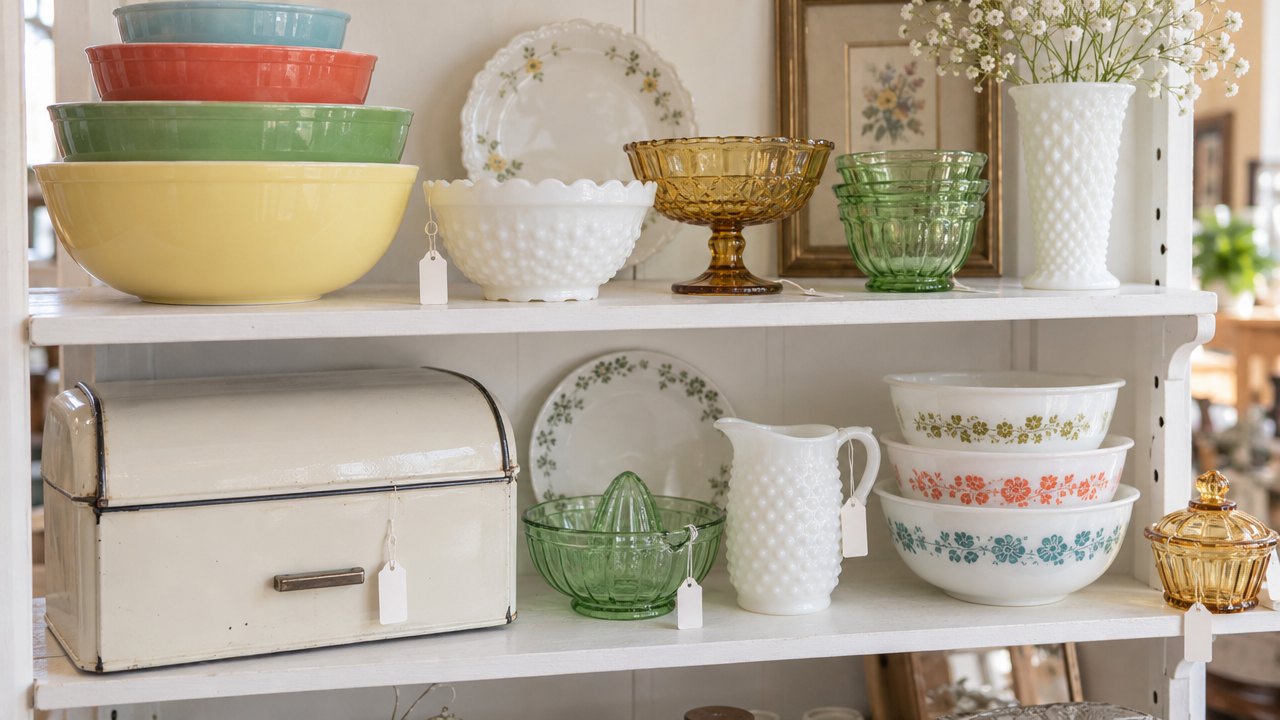
Facebook Marketplace for big, heavy or fragile pieces. No fee on an in-person sale and nothing to pack. That's why furniture, crocks and a set of mixing bowls do well there. The complaints were no-shows, lowball messages and scams.
Whatnot for pieces that shine on camera. Sellers who like live selling love it. The biggest complaint in the thread was support. When something went wrong with an order, people said it was hard to reach a person.
Your booth or shop for your regulars. A few sellers said their booth is still their favorite. Buyers often pay cash, so there's no platform fee, and you meet the people who buy from you. If you're weighing a booth, our post on how much antique booth owners make walks through the numbers.
Why do most vintage sellers use more than one platform?
Because each platform reaches a different buyer, and vintage is one-of-a-kind. That Pyrex bowl may sit on Vinted and sell in a day on Etsy. A cast iron skillet may get no bites in your booth and three watchers on eBay.
Selling in more than one place gives each piece more chances. It also gives you more work. Every platform you add is another set of listings to write, photograph, price and keep track of. And when a one-of-a-kind piece sells, it has to come down everywhere else that same day, or you'll sell it twice.
That's where sellers in the thread got stuck. The platforms weren't the problem. Keeping up with all of them was.

How do I choose which platform to add next?
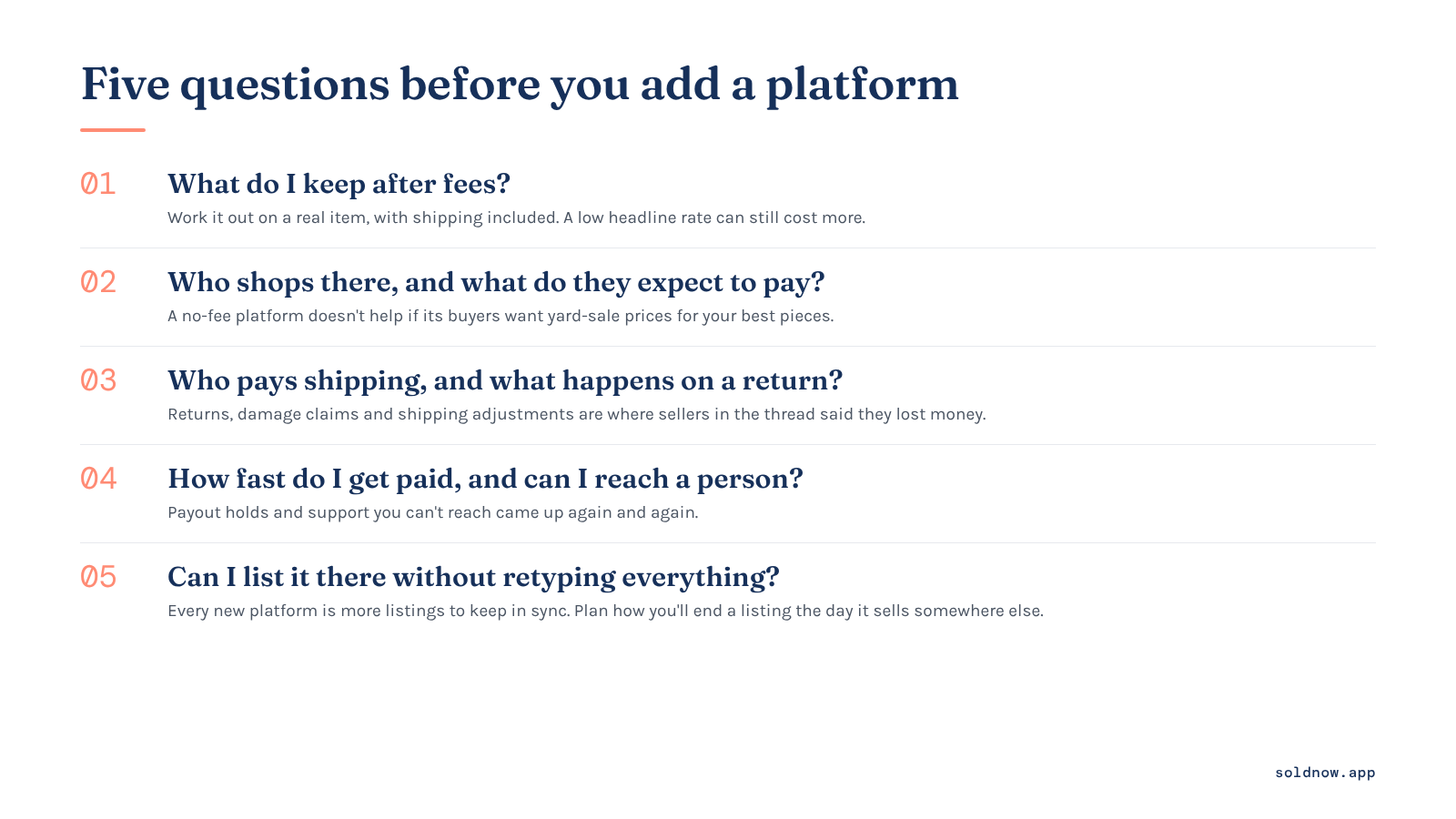
Before you add a platform, ask five questions.
- What do I keep after fees? Work it out on a real piece, shipping included. A low headline rate can still cost more.
- Who shops there, and what do they expect to pay? A no-fee platform doesn't help if its buyers want yard-sale prices for your best pieces.
- Who pays shipping, and what happens on a return? Returns, damage claims and shipping adjustments are where sellers in the thread said they lost money.
- How fast do I get paid, and can I reach a person? Payout holds and support you can't reach came up again and again.
- Can I list it there without retyping everything? Every new platform means more listings to keep in sync. Plan how you'll end a listing the day it sells somewhere else.
If buyers on a new platform send a lot of offers, our guide on how to handle offers on antiques and vintage can help you set your floor before the first one comes in.
Selling in more than one place without the extra work
If you're listing on more than one platform, SOLD Now keeps it in one place. The Gold plan ($39.99 a month) lets you crosslist to eBay, Etsy, Whatnot and Facebook. Whatnot and Facebook listings go up by manual import. When a piece sells on one platform, SOLD Now ends the eBay and Etsy listings for you, so you don't sell the same piece twice.
Frequently Asked Questions
Which selling platform has the lowest fees for vintage?
For sellers, Vinted and Facebook Marketplace local pickup have no selling fee. On a $40 sale with $10 shipping, Whatnot's US standard tier was about $4.95, Facebook Marketplace shipped was $5.00, Etsy was $5.20 and eBay was $7.20 (fee pages checked November 1, 2026).
Is Etsy or eBay better for selling vintage?
It depends on the piece. Sellers in the thread used eBay for rare, antique and higher-priced pieces and for auctions. They used Etsy for vintage décor and hard goods, where buyers come looking for vintage on purpose. Many sell on both.
Does eBay charge fees on shipping?
Yes. eBay's final value fee is figured on the total amount of the sale, which includes shipping and handling. In most categories it's 13.6% for sellers without a Store, plus $0.40 per order over $10.
What does Whatnot charge sellers in 2026?
Since September 21, 2026, Whatnot uses a tiered commission. US sellers in the standard tier pay 8% on the item price, plus payment processing of 2.9% and $0.30 on the order total. Rates for some categories and high-value orders are different, so check Whatnot's fee page.
How do I keep from selling the same vintage piece twice on different platforms?
End the other listings as soon as a piece sells. You can do it by hand, or use a tool that does it for you. SOLD Now's Gold plan ends your eBay and Etsy listings automatically when a piece sells somewhere else.
Built for resellers, by resellers.
Sources
Fee pages checked November 1, 2026. Rates change; check before you price.
- eBay, Selling fees (opens in a new tab)
- Etsy, Fees & Payments Policy (opens in a new tab)
- Etsy, Etsy Payments Policy (opens in a new tab)
- Whatnot, Seller fees (tiered structure from September 21, 2026) (opens in a new tab)
- Vinted, Selling fees and Buyer Protection (opens in a new tab)
- Facebook Marketplace selling fee (10%, $0.80 minimum, shipped orders), third-party summaries citing Meta's Help Center: Closo (opens in a new tab) and ZIK Analytics (opens in a new tab)
- A reseller group thread, “What is your favorite platform and why?” (fall 2026), paraphrased, names withheld