Blog Show-floor stories
How Marissa's Home Ran the Texas Pyrex Swap on SOLD Now
How do you run a smooth checkout, stay on top of inventory, and keep customers coming back, all at a packed vintage market? Here's exactly what worked, and what every reseller can steal from the playbook.
Introduction: When the Show Floor Gets Real
Okay, so if you've ever done an in-person vintage market, you already know the vibe. The night before, you're staring at a pile of bins wondering if you packed the right stuff. The morning of, you're hauling everything in before sunrise, running on coffee and adrenaline. And the second those doors open? It's total chaos in the best possible way.
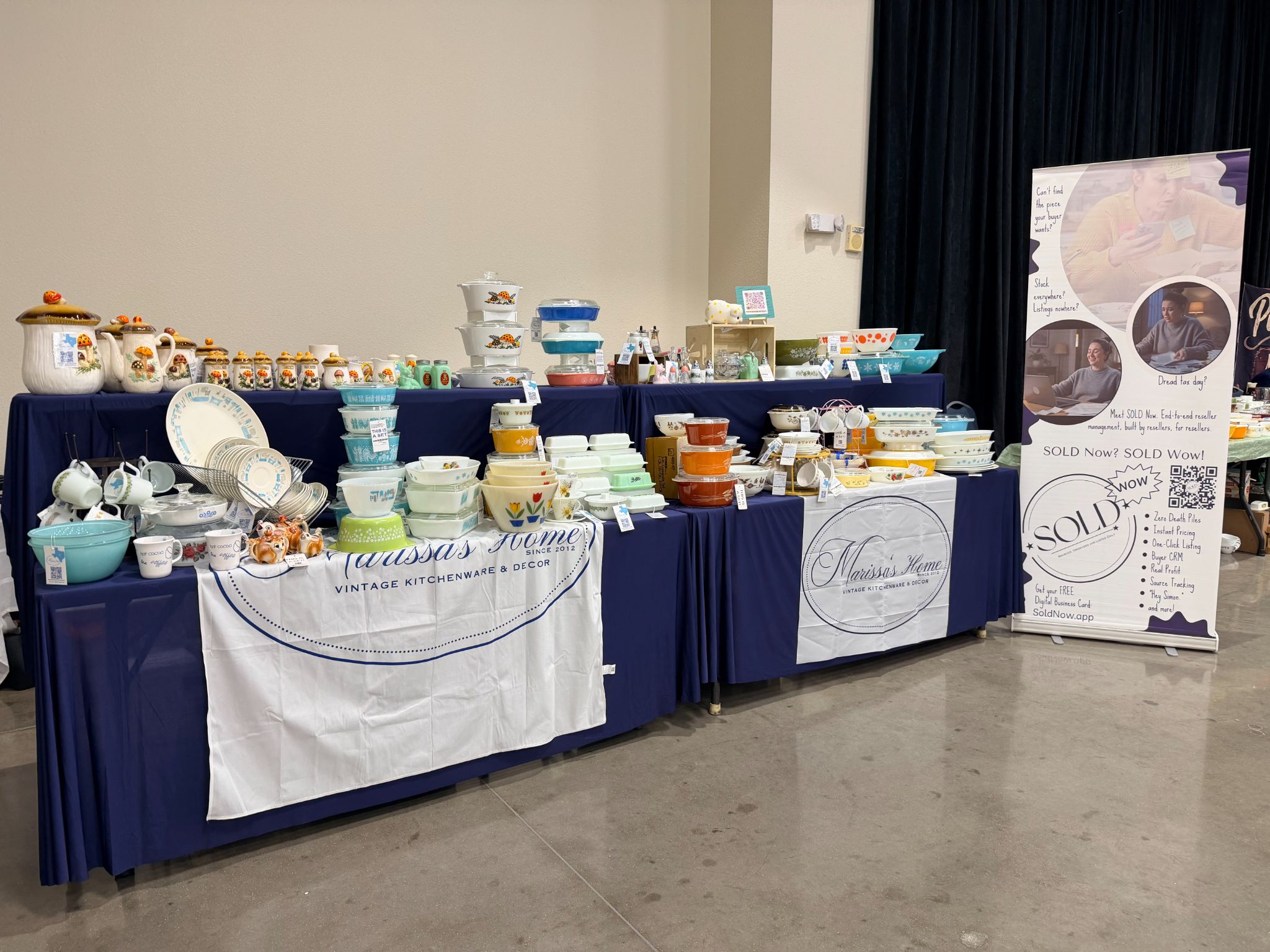
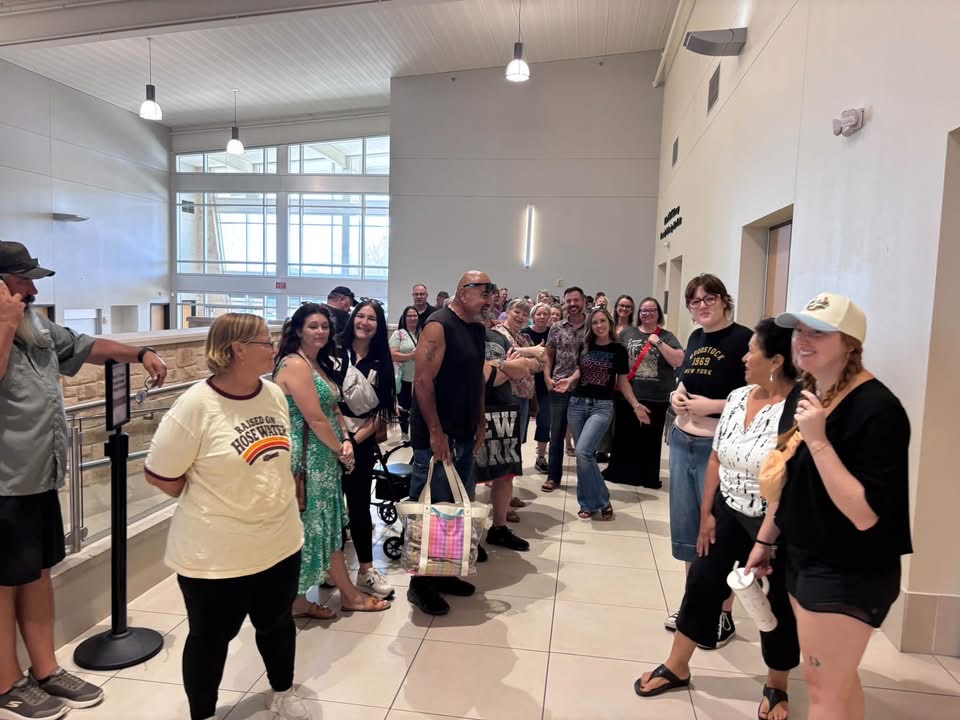
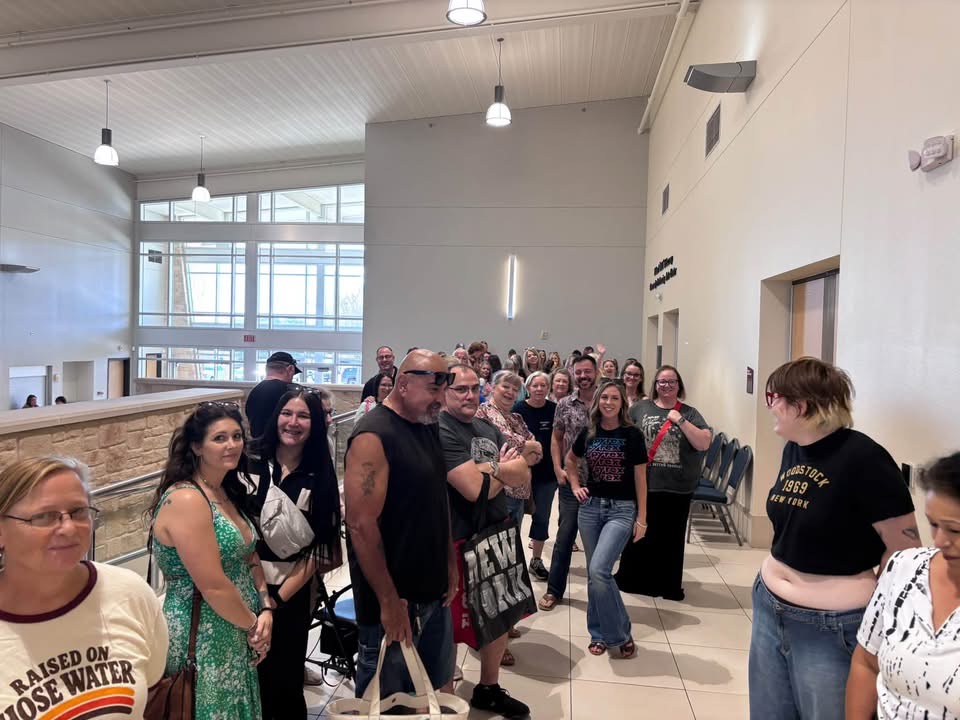
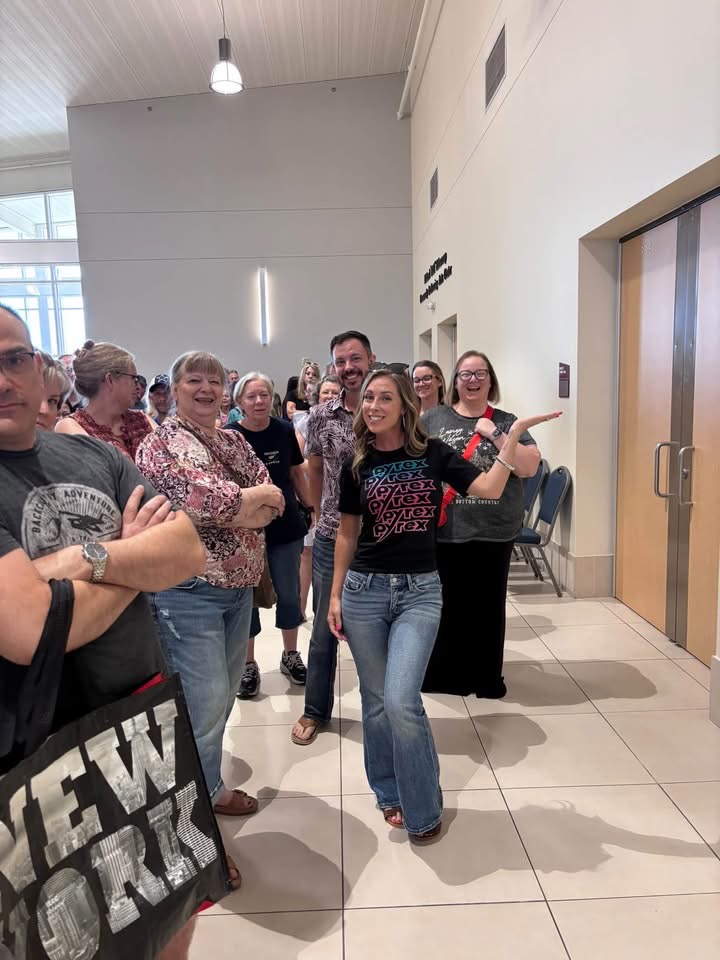
That was us at the Texas Pyrex Swap and Vintage Market (opens in a new tab) at the Cleburne Conference Center in Cleburne, TX. Somewhere between 400 and 500 people came through that day — the biggest in-person event Marissa's Home has ever done. I won't lie, I was nervous. We all were.
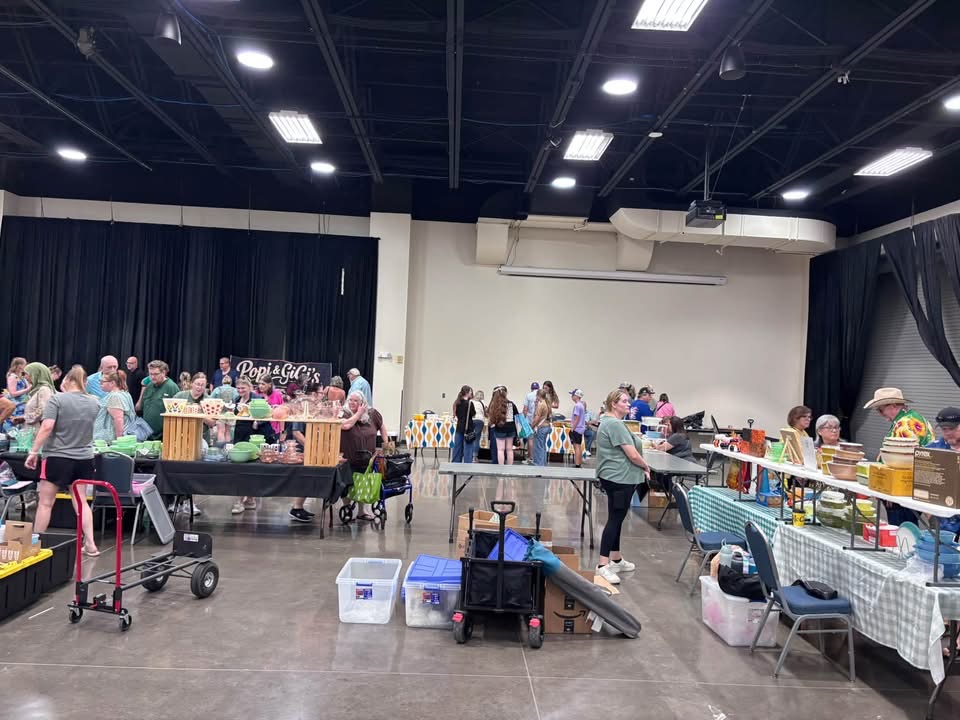
We didn't know if we'd brought the right pieces, if three of us could actually keep up, or if checkout would turn into a bottleneck that sent people walking. But here's the thing — we'd done the prep. And honestly? That prep saved us. I'm Marissa, founder of Marissa's Home and SOLD Now, and I just want to share what actually happened that day — what worked, what we're doing differently next time, and what you can totally steal for your own shows.
Part oneWhat Worked: SOLD Now in Action at the Pyrex Swap
Challenge #1Once a Piece Leaves Your Table, the Customer Forgets Where They Got It
This one is SO real and nobody talks about it enough. A customer grabs something they love, pays for it, walks out the door — and you never hear from them again because they have zero idea who you are or how to find you. The sale ends at the register and that's that. Such a missed opportunity.
Before we left the house, I used SOLD Now to create personalized event price tags for every single item we brought. Each tag was scannable with our portable scanner, which made building invoices at checkout super fast. But the best part? Every tag had my Digital Business Card QR code on it — so even weeks later, when that customer is ready to shop again, they can find Marissa's Home on every platform. One sale can absolutely turn into a forever customer if you give them a way to come back. That little tag is basically your handshake after the show is over. 🤝
Challenge #2Checkout Is Where Lines Stall and Sales Walk Away
Ugh, the checkout bottleneck. We've all been there — one person digging for change, someone else trying to get cell service for their card reader, a handwritten receipt being scratched out while impatient shoppers set their finds back down and drift to the next booth. You don't just lose the sale. You lose the customer.
We ran checkout through SOLD Now's invoicing feature instead. Each invoice had a scannable QR code and customers paid right on their phones — just a few taps and done. No clunky equipment, no fumbling, no line drama. People actually commented on how smooth it was, which honestly made me so happy. If you do in-person events at all, digital invoicing isn't a fancy upgrade. It's just... the way to do it.
Challenge #3Haggling on the Spot Without Knowing Your Numbers
Oh man. Someone makes you an offer, you haven't had nearly enough coffee, the line is backing up, and you just say yes — even though you probably went too low. Or you hold firm on something you totally had room to move on and lose the sale. In-the-moment haggling without knowing your numbers is basically just guessing, and guessing is stressful.
Because every item was already loaded into SOLD Now's inventory system — including what I paid for it — I knew my numbers before the conversation even started. When someone wanted to negotiate, I could see exactly how much wiggle room I had. So I could say yes with full confidence when it made sense, and kindly hold firm when it didn't. No guilt, no second-guessing, no accidentally selling myself short. Know your cost before you hit the floor. Seriously, game changer.
Challenge #4“Do You Have Any...?” Followed by a Frantic Dig Through Boxes
With hundreds of Pyrex lovers asking about specific patterns — Butterprint, Friendship, Gooseberry, you name it — the LAST thing you want is to dig through twelve unlabeled bins while the customer slowly loses interest and wanders toward the next booth. That frantic searching costs you sales and energy. Both are precious.
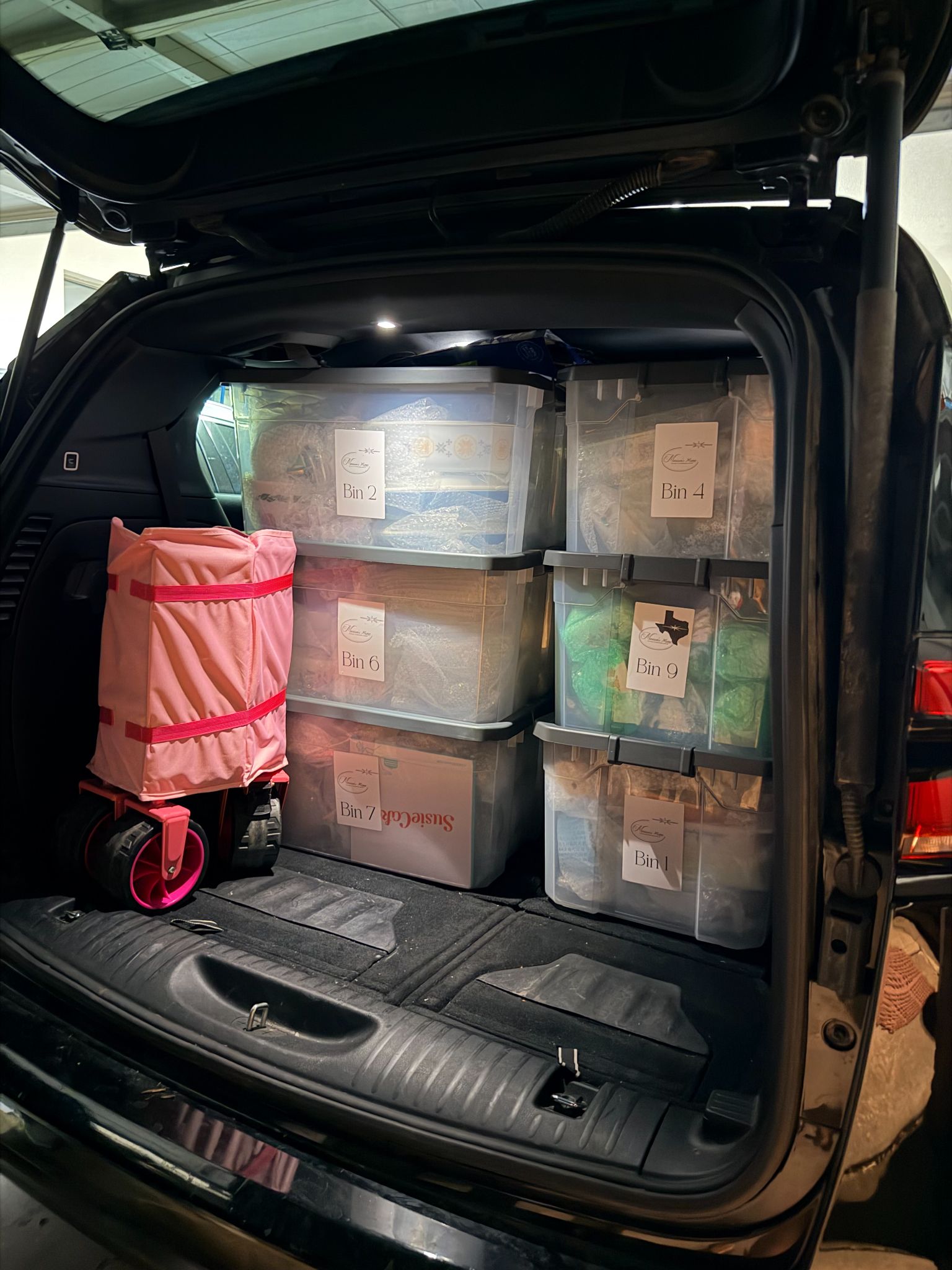
We packed everything into labeled bins and added a bin location to every single item in SOLD Now before we left home. So when someone asked for a specific piece or pattern, we looked it up in literally seconds and went straight to the right bin. No digging, no “I think it might be in one of those...” moments. We looked organized and professional — because we actually were. 😄
Challenge #5One Person Trying to Sell, Ring Up, and Wrap All at Once
If you've ever worked a busy show solo or understaffed, you know how fast it all falls apart. You're mid-convo about a piece, someone's waving their card to pay, a third person wants to negotiate on the casserole dish, and meanwhile the glass is teetering on the edge of the table. Something always suffers — usually the customer experience, sometimes the glass. 😬
We came in with a team and clear roles from the jump. One person stayed on the floor — talking with customers, answering questions, sharing the stories behind pieces. The other two handled checkout and wrapping. Everyone knew their job before the doors opened and the whole day just... flowed. A simple team structure and defined roles might honestly be the most underrated show prep tip out there.
Challenge #6Shoppers Carrying Your Finds in Someone Else's Bag
Okay this one sounds small but it really adds up. When a customer walks the show floor carrying their purchase in a plain bag — or worse, a competitor's branded bag — every person who sees them has no idea where they bought it. You just funded someone else's brand awareness. Rude! 😂
We got a Marissa's Home stamp and branded all our carry bags before the event. Every customer who walked the floor with one of our bags was basically advertising for us without even knowing it. Walking billboards, all day long. Small investment, big payoff.
Part twoWhat We'll Do Differently Next Time
Lesson #1Our Best Pieces Buried at the Bottom of the Load
Hard truth: if your best pieces aren't on the table when the doors open, you may have already missed your best customers. Serious collectors and pickers show up early, move fast, and make decisions in the first thirty minutes. If your bangers are buried in the fifth bin you unload, you've already missed your shot with them.
All of our top pieces go in the first five bins — first things on the table, no exceptions. Everything else gets built around these so they are front and center. It sounds so obvious in hindsight. The kind of thing you only figure out after you've done it the hard way. 🙃
Lesson #2A Hot Category Scattered Across Every Bin
Salt and pepper shakers were a HIT at the Pyrex Swap. Customers kept asking for them and we had plenty — but they were spread across multiple bins, which made it slower to pull them and honestly harder to keep track of what we had left. We definitely left some sales on the table there.
All salt and pepper shakers go in one dedicated bin with the location logged in SOLD Now. One lookup, one location, done. Grouping your hot categories together isn't just about convenience — it's about selling more of what people are actually looking for when they're ready to buy.
Lesson #3A Display Layout That Works Against You
Our tables were a little tall for my comfort and I found it harder than I expected to lay pieces out in a way that felt inviting and easy to browse. When the display is awkward, shoppers can't really see what you have — and they move on.
We're bringing two extra tables and a couple of folding shelves to create varying heights and better visual flow. When customers can actually see your inventory, they buy more of it. Simple as that.
The takeawayPrep Is the Product
We walked into Cleburne not totally sure how the day would go. We walked out knowing we'd taken good care of every single person who stopped by — and honestly, that's everything to me.
The prep did the heavy lifting. Every piece was tagged, priced, and placed before we ever left home. Invoicing was ready. Inventory was organized. The team knew their roles. By the time those doors opened, we weren't scrambling — we were just... ready. And that meant we could actually be present, talk glass with people who love it as much as we do, and enjoy the day.
Not just efficiency — presence.
That's what having the right tools actually gives you. Not just efficiency — presence. The ability to show up fully, connect with your people, and trust that the backend is handled. That's the whole point.